Consciousness · A DIFFERENT PERSPECTIVE
Consciousness Beyond the Brain
The hardest question in science might also be the most personal.
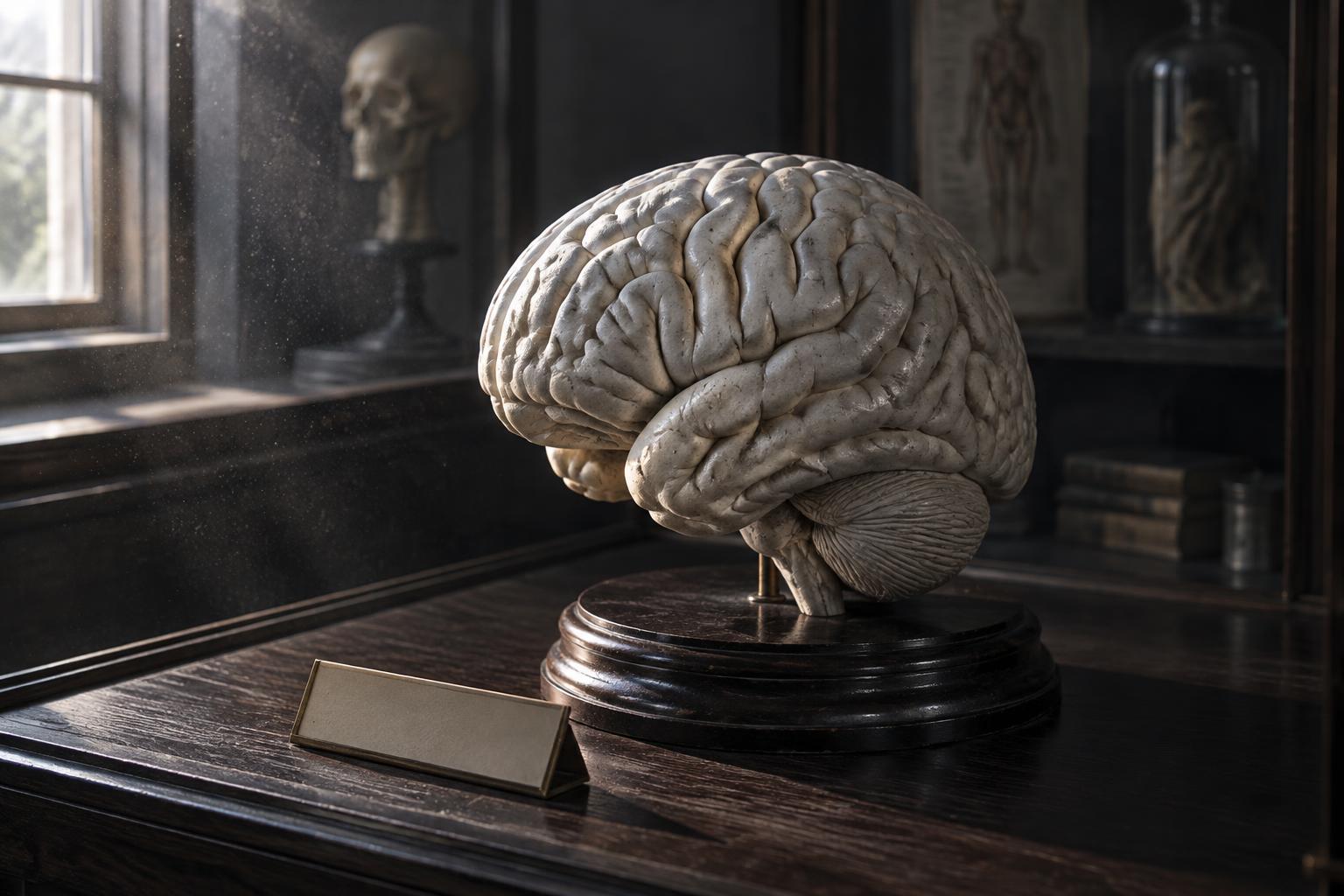
Consciousness is reliably correlated with specific patterns of brain activity, and every intervention that alters the brain, from anesthesia to injury, alters experience in predictable ways. Whether consciousness is produced entirely by the brain or merely filtered or enabled by it remains an open philosophical question, because no current theory explains why physical processes give rise to subjective experience at all. Claims that consciousness extends beyond the brain, through panpsychism or idealism, are coherent philosophical positions but are not supported by direct empirical evidence in the way neural correlates are.
The hard problem
In 1995 the philosopher David Chalmers gave a name to something that had troubled thinkers for centuries: the hard problem of consciousness. The easy problems, as he called them, are the ones cognitive science is built to solve: how the brain discriminates stimuli, integrates information, reports internal states, and controls behavior. These are easy not because they are simple but because we know what kind of answer would satisfy us, a mechanism, a circuit, a computation. The hard problem is different. It asks why any of that physical processing is accompanied by subjective experience at all, why there is something it is like to see red or feel pain rather than the information being processed in the dark, with no inner light switched on.
Chalmers argued that even a complete account of the brain's functional organization would leave this question unanswered. You could know every synapse, every firing pattern, every feedback loop, and still face the question of why that activity feels like anything from the inside. This is not a claim that science has failed so far and might succeed later with better instruments. It is a claim that explaining function, however thoroughly, is a different kind of explanation than accounting for experience, and that the two may not be bridgeable by the same methods that solved other problems in biology and physics.
Critics of the hard problem, including philosophers such as Daniel Dennett, have argued that the distinction itself is misleading, that once all the easy problems are actually solved, there will be nothing left over to explain, because the feeling of mystery is itself a cognitive phenomenon that a sufficiently complete theory would account for. This disagreement is not a side issue. It shapes which research programs look promising and which look like dead ends, and it has never been resolved by evidence, because the two camps often disagree about what would even count as evidence settling the matter.
What the correlations actually show
Neuroscience has made substantial progress identifying neural correlates of consciousness, the specific patterns of brain activity that reliably accompany a given conscious experience. Studies using functional magnetic resonance imaging and electroencephalography have shown that particular networks, especially those linking posterior cortical regions with frontal and parietal areas, become active when a person reports awareness of a stimulus and quiet down when the same stimulus is processed without awareness, as happens in blindsight or subliminal perception. Anesthesia research has been especially informative here, since drugs like propofol reliably disrupt communication between brain regions at the same dose that erases reportable experience, and that disruption can be measured directly.
Clinical cases reinforce the same picture. Damage to specific brain regions produces specific, reproducible changes in experience: damage to the visual cortex can eliminate conscious sight while leaving some visual processing intact, as in blindsight, damage to certain parietal areas can eliminate awareness of one half of the body or visual field, and damage to brainstem structures involved in arousal can eliminate consciousness altogether, as in persistent vegetative states. These are not isolated anecdotes. They form a dense, reproducible body of evidence that ties the character and presence of experience tightly to the state of particular physical structures.
What this body of evidence establishes beyond reasonable dispute is correlation and, in many cases, strong evidence of dependence: change the brain in a specified way and experience changes in a predictable way. What it does not establish, on its own, is the metaphysical claim that the brain produces consciousness out of nothing, as opposed to the brain acting as a necessary condition, a filter, or a transducer for something more fundamental. That further step is an interpretive leap, and different philosophers and scientists make it differently depending on their background commitments.
Global workspace and integrated information
Two of the most developed scientific theories of consciousness try to explain not just where in the brain experience happens but why certain processes become conscious while others do not. Global workspace theory, developed by Bernard Baars and extended by Stanislas Dehaene and others, proposes that consciousness arises when information is broadcast widely across a network of brain regions, making it available to memory, language, and decision making systems simultaneously. On this view, unconscious processing happens constantly and locally, in isolated modules, while consciousness is what happens when information wins access to a shared, global stage.
Integrated information theory, developed by Giulio Tononi, takes a different approach, starting from the structure of experience itself rather than from cognitive function. It proposes that consciousness corresponds to a system's capacity to integrate information in a way that cannot be reduced to the sum of its separate parts, a quantity Tononi calls phi. A system with high phi, on this account, is conscious to a degree proportional to that integration, regardless of whether it looks like a brain. This has a striking consequence: the theory predicts that simple systems, and in principle even certain non-biological systems, could have some nonzero degree of consciousness if they are organized the right way.
These two theories do not simply agree with different vocabularies, they make different and sometimes conflicting predictions, for instance about which patients in minimally conscious states retain some awareness, and a large adversarial collaboration project was organized specifically to test them against each other using preregistered experiments. Neither theory has been confirmed outright and neither has been fully falsified, a reminder that the science of consciousness, despite real progress on correlates, is still working out which of its competing frameworks captures something true about why experience happens at all.
Panpsychism and idealism
If the hard problem is genuinely hard, some philosophers argue, then perhaps the assumption that consciousness emerges late and only from complex brains is the mistake. Panpsychism, a position with a long history and recent prominent defenders including the philosopher Philip Goff, holds that consciousness, or some primitive precursor to it, is a basic feature of physical reality, present in some minimal form even in simple matter, and that brains do not create consciousness from nonconscious ingredients but rather combine and organize an already present ingredient into the rich experience we recognize. This is sometimes motivated less by direct evidence and more by the argument that every alternative view faces an equally severe difficulty: materialism cannot explain how experience arises from nonexperiential matter, and panpsychism simply declines to make that leap in the first place.
Idealism takes a more radical route, holding that mind or experience is the fundamental reality and that physical matter, including brains, is in some sense derivative or constructed from mental events. Versions of this view trace back through Berkeley in Western philosophy and have independent long traditions in some Vedantic and Buddhist philosophical schools. Contemporary defenders, such as the philosopher Bernardo Kastrup, argue that treating experience as fundamental actually resolves certain puzzles about measurement and observation that physical theories struggle with on their own.
It is important to be precise about the evidential status of these positions. Panpsychism and idealism are serious, carefully argued philosophical positions, not fringe speculation, and they engage directly with real problems in the philosophy of mind. But they are not supported by experimental evidence in the way the neural correlates of consciousness are. No measurement has detected proto-experience in an electron, and no experiment distinguishes idealism from materialism, because both are compatible with the same observable data. Their appeal rests on arguments about coherence and explanatory elegance, not on data that only one of them predicts.
What 'beyond the brain' claims actually assert
The phrase consciousness beyond the brain covers a wide range of claims that are often lumped together but differ enormously in their evidential standing. At one end sit sober philosophical positions, like panpsychism and idealism, which accept all the neuroscience of correlation and dependence but reinterpret its metaphysical meaning. At the other end sit much stronger empirical claims, for instance that consciousness can be detached from the brain and survive its destruction, or that near death experiences demonstrate awareness existing independently of brain function. These stronger claims are frequently cited in popular discussion, but they rest on reports that are difficult to verify, often collected after the fact, under conditions where exact brain states and timing are hard to establish with confidence.
Researchers who study near death and out of body experiences, including work associated with resuscitation science, generally find that reported experiences correlate with known effects of oxygen deprivation, altered neurotransmitter activity, and the unusual physiology of a dying or resuscitated brain, rather than demonstrating consciousness operating independently of any brain activity. This does not make such experiences meaningless or dismiss their significance to the people who have them, but it does mean the strong claim that these cases prove consciousness exists outside the brain outruns what the available evidence supports.
It is worth distinguishing, then, between an open question and an answered one. Whether experience is wholly generated by the brain or is in some sense more fundamental and merely channeled by it, that is a genuinely open question in philosophy of mind, unresolved by current science. Whether specific extraordinary claims, like disembodied awareness persisting after measurable brain death, have been demonstrated, that is a much narrower empirical question, and on that one the evidence currently available does not support the claim.
Why the question resists closure
Part of what makes this topic so persistently difficult is a feature of the explanatory gap itself: any theory of consciousness has to be judged, in the end, against first person reports, since there is no outside instrument that detects experience directly the way a thermometer detects temperature. This puts consciousness science in an unusual epistemic position compared to most of physics and biology, where the object of study can be measured independently of anyone's testimony about it. That asymmetry does not make the science illegitimate, but it does mean theories are harder to adjudicate, and it helps explain why multiple frameworks, from global workspace theory to integrated information theory to various forms of panpsychism, continue to coexist without a decisive experiment ruling the others out.
There is also a structural reason philosophers keep returning to this topic rather than treating it as a temporary gap awaiting better brain scanners. Even a perfect map of neural correlates, one that predicted every reported experience from brain activity with complete accuracy, would still be a map of correlation and prediction, not automatically an explanation of why the correlated process is accompanied by experience rather than occurring, as Chalmers puts it, in the dark. Whether that explanatory demand is one science can eventually meet, or whether it marks a genuine limit on what a physical theory can tell us about subjective experience, is itself contested, and that contest shows no sign of ending soon.
SOURCES AND FURTHER READING
- Facing Up to the Problem of Consciousness David Chalmers, Journal of Consciousness Studies
- Consciousness Stanford Encyclopedia of Philosophy
- Panpsychism Stanford Encyclopedia of Philosophy
- Integrated information theory Scholarpedia
- The Neuroscience of Consciousness Stanford Encyclopedia of Philosophy
- Global workspace theory Scholarpedia